


Border collies are energetic dogs that rarely let anything get them down. So, it’s often quite surprising to see a collie put off their game by itchiness, sore ears, or an upset stomach.
Unfortunately, allergies are one of the few things that can really get under collies’ skin and leave them rather distracted from what’s ahead. So, as soon as you notice allergy symptoms, it’s important to get your dog the help they need to feel better fast.
To help you on that mission, here’s what you need to know about allergies in border collies.
Most Common Border Collie Allergies
Border collies can develop allergies to anything in their environment, such as:
- Grass
- Pollen
- Dust mites
- Fleas
- Bee stings
- Insect bites
- Fur care products
- Perfume
Food allergies are common in this breed as well. Despite perceptions, it’s not usually the grains that are to blame, either. Instead, proteins, like chicken, beef, and lamb, cause the immune system to overreact, resulting in mild to severe allergy symptoms.
Signs Your Border Collie Has Allergies
When an allergic reaction occurs, your border collie may:
- Develop dry, irritated skin
- Pause what they’re doing to itch and scratch
- Chew on their paws
- Have watery eyes
- Get ear infections
A runny nose can occur as well, especially when dealing with allergies to grass, pollen, and dust mites.
As for food allergies, they usually leave your dog feeling sick to their stomach. They may even have diarrhea or start vomiting as a result. When that occurs, you may notice your dog trying to eat a lot of grass to settle their tummy. If left untreated, the allergies may even put them off their own food, resulting in malnutrition and weight loss.
Severe allergic reactions may cause your dog to swell up and have difficulty breathing. If that happens, you must immediately rush them to an emergency vet for care. They may need medication to stop the reaction in its tracks and additional support to make a full recovery.

How to Help Your Collie Feel Better
Before you can help your border collie feel better, you need to know what’s causing the allergen. There are two main ways to do that: allergy testing and an elimination diet. The testing process is primarily used for environmental allergens, while an elimination diet helps determine what's causing the food allergies.
A vet will need to perform the allergy tests on your pet. They may want to do a blood test called a radioallergosorbent test, or RAST test, to identify the allergen. Or they may prefer to do a full allergy panel, which involves shaving a small area of fur, exposing the skin to allergens, and gauging the resulting reaction.
As for the elimination diet, you can either do that on your own or with guidance from your veterinarian. To start this process, you’ll need to put your pet on a hypoallergenic diet, like a well-balanced insect-based kibble or wet food.
You will keep them on that food for at least six weeks to see if the allergy symptoms go away. If they do, you’ll reintroduce certain food items one by one to see which ones cause a reaction. All along the way, you must keep great notes on how your dog feels to accurately identify the problem foods.
Border Collie Allergy Treatments
Ideally, you’ll want to eliminate the allergen from your dog’s life. But if that’s not possible, you can still help them get relief with either natural allergy remedies or prescription allergy medications. The cause and severity of your dog’s allergies will determine which method will work best.
Speak with your vet to find the right solutions for your pet’s needs, and then move forward with a trial run of whatever treatment you select. If your dog starts feeling better, you’re on the right track. If not, you can definitely try something else after a few weeks or so.
Your border collie looks to you for all they need, including help relieving their allergy symptoms. So, be ready to act fast when itchiness, stomach upset, or other symptoms start up. Your dog will undoubtedly appreciate your ability to tune into how they’re feeling and help them feel better fast. And you’ll get to go back to watching your collie’s zany antics once again without allergy symptoms getting in the way of all the fun and excitement.
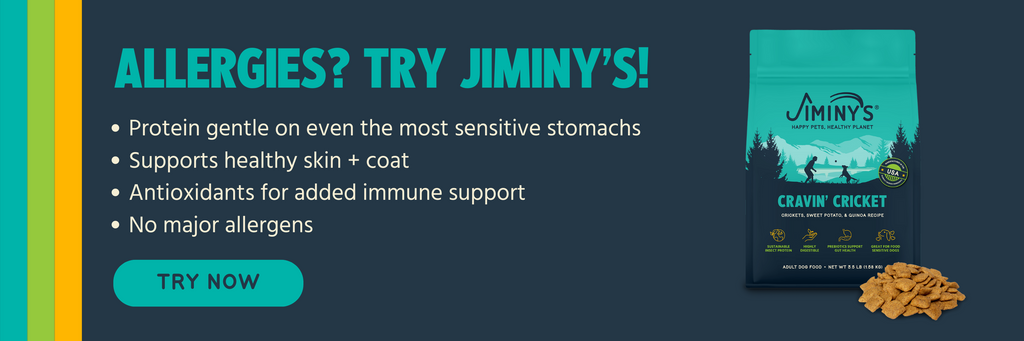
Jiminy’s Insect based dog food is a natural dog food packed with probiotics and prebiotics for dogs. Treat your pup to a sustainable and eco-friendly dog food and dog treat option. Learn how insect protein is a healthy diet for pets.
At Jiminy’s, we believe in giving your dogs the very best and that starts with our insect-based dog food. By using crickets and grubs as our primary protein source, we produce quality kibble, wet food, and treats designed to provide complete nutrition for dogs. In fact, insect protein meets or exceeds all AAFCO requirements, making it a superfood you and your dog will love.
To create the perfect formula every time, we follow that up with whole food ingredients that offer natural probiotics in every bite. Together, the naturally prebiotic insect protein and probiotic-rich foods help build a strong gut microbiome. Our innovative protein doesn’t trigger allergies like traditional pet food ingredients either, resulting in better gut health for food-sensitive dogs.
Beyond that, our products are eco-friendly, humane, and safe for dogs of all sizes. So, you can definitely feel good about feeding your dog Jiminy’s – and your dog will enjoy our tasty Cravin’ Cricket and Good Grub flavors.
FAQ - Border Collie Allergies
1. What kinds of allergies are common in Border Collies?
Border Collies can develop allergies to many environmental triggers — including grass, pollen, dust mites, fleas, bee stings, insect bites, grooming products, and perfumes. They’re also prone to food allergies, often to proteins like chicken, beef, or lamb.
2. What are the typical signs that a Border Collie is allergic to something?
Allergy symptoms may include dry, irritated skin, persistent itching or scratching, chewing of paws, watery eyes, and ear infections. Gastrointestinal signs like vomiting or diarrhea can also occur, especially with food allergies. In severe cases, swelling and breathing difficulty require immediate veterinary care.
3. Can allergies cause digestive problems in a Border Collie?
Yes — food allergies often affect the digestive system. Symptoms may include diarrhea, vomiting, and nausea. Some Border Collies may try to eat grass to soothe their upset stomach when experiencing a food-related reaction.
4. How are environmental allergies diagnosed in Border Collies?
A veterinarian can diagnose environmental allergies through allergy testing, such as a blood test (RAST) or a skin allergy panel, which exposes small skin areas to common allergens and observes reactions.
5. What is an elimination diet and how does it help?
An elimination diet involves feeding your dog a hypoallergenic diet — often with novel proteins (such as insect-based food) — for several weeks to see if symptoms resolve. After that, individual ingredients are reintroduced to identify specific food allergens.
6. Are Border Collies hypoallergenic?
No — Border Collies are not considered hypoallergenic. Their double coat sheds year-round, which can spread dander and allergens in the environment, potentially triggering allergies in sensitive individuals.
7. Can grooming products trigger allergic reactions?
Yes — some grooming products (like shampoos, conditioners, or sprays with fragrances or harsh chemicals) can irritate sensitive skin and contribute to allergic reactions in Border Collies.
8. How are food allergies treated in Border Collies?
Treatment starts with identifying the allergenic food ingredient via an elimination diet. Once identified, avoiding that ingredient and switching to a balanced, novel or limited-ingredient diet helps reduce allergic reactions. Severe cases might also need vet-prescribed medication or supportive care.
9. Can allergies lead to secondary infections?
Yes — persistent scratching and skin irritation can open the door to secondary bacterial or yeast infections. These often require veterinary-prescribed antibiotics or antifungal treatment to heal.
10. When should I seek veterinary help for my Border Collie’s allergies?
You should see a vet if your dog has persistent itching, recurring ear infections, ongoing gastrointestinal issues, or signs of severe allergic reaction like swelling or trouble breathing. Early diagnosis and management help prevent complications.
11. Will allergy symptoms in Border Collies worsen with age?
Allergies in dogs often become more pronounced over time, especially if exposure to the allergen continues or if management steps haven’t been implemented. Regular vet care and environmental adjustments can help manage symptoms.

